

Lessons. News. Reviews.




How to learn the notes on the fretboard
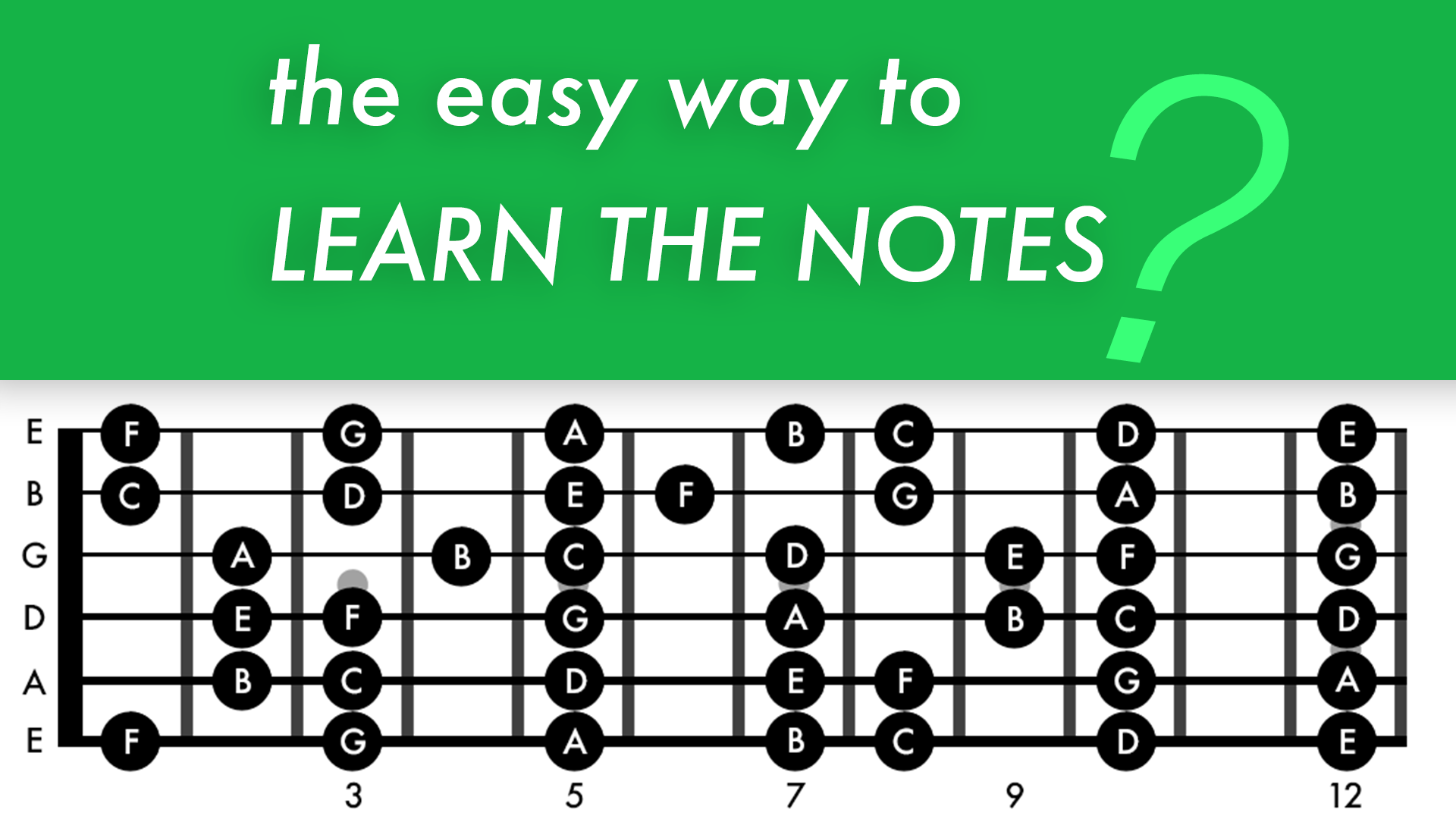
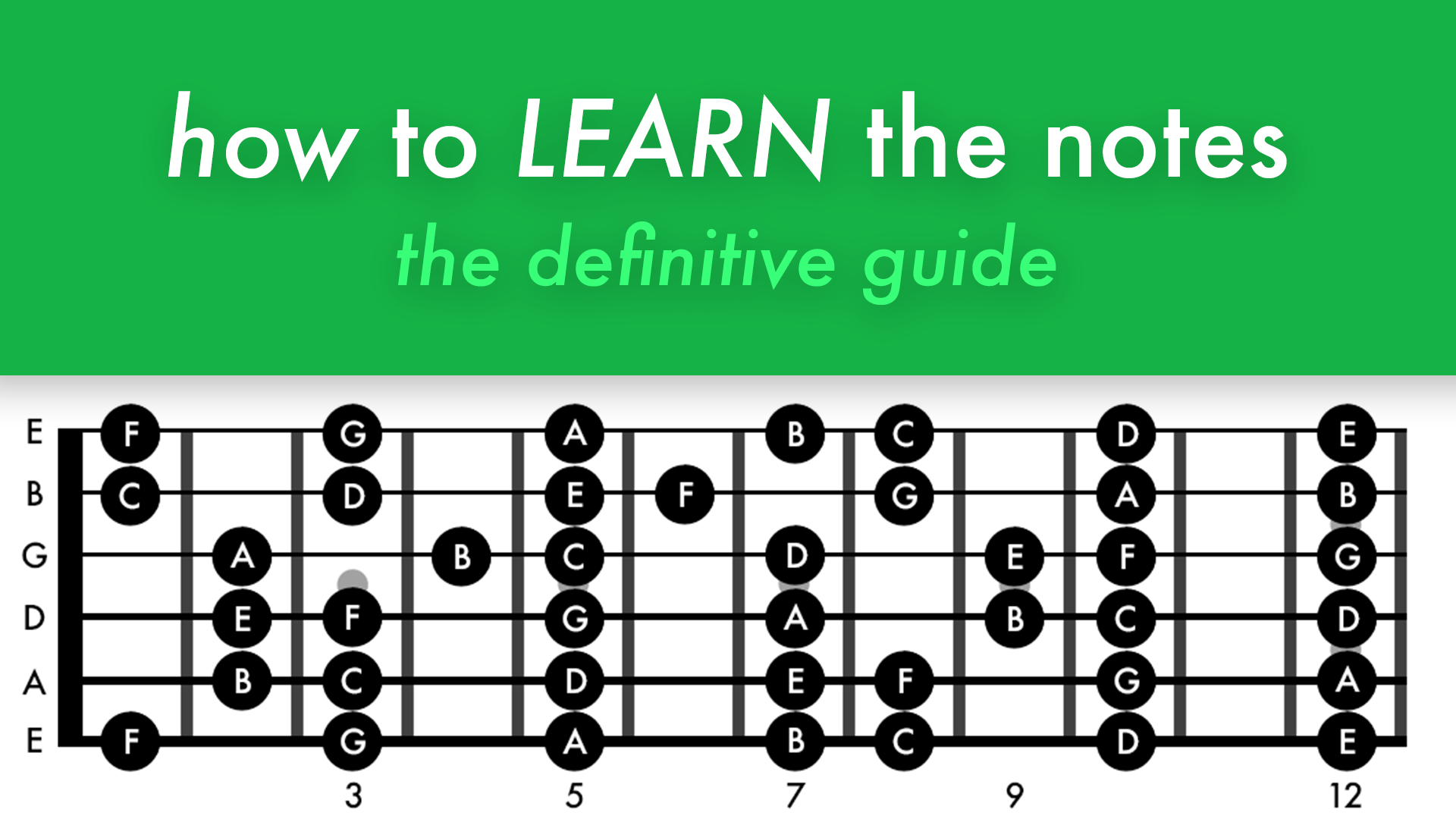
Learning the fretboard is easy and can be done in as little as 30-seconds per day. To do this, call out a random note from the diagram below and THEN play it. A lot of students end up calling out a note and playing it at the same time when they try this exercise. Don’t do this. Call out the note and THEN begin moving your hand to play it. Resist the temptation to do both at the same time.
The most effective way to memorise notes on the guitar fretboard
You don’t need to know the notes on the fretboard to enjoy playing the guitar. But no one who actually knows them fluently is going to suggest you shouldn’t bother learning them if you’re interested. The level of freedom you’ll get from knowing the notes on the fretboard will make everything you do on the guitar so much easier.
The most important musical concept for learning guitar
The most important concept to understand when you’re learning music is the idea of context. This doesn’t just apply if you are learning how to play the guitar - this is more fundamental than that. Context is the only thing that matters.
There are 12 possible notes we can play on the guitar. Every one of those notes can suggest a different sound or feeling depending on the context.
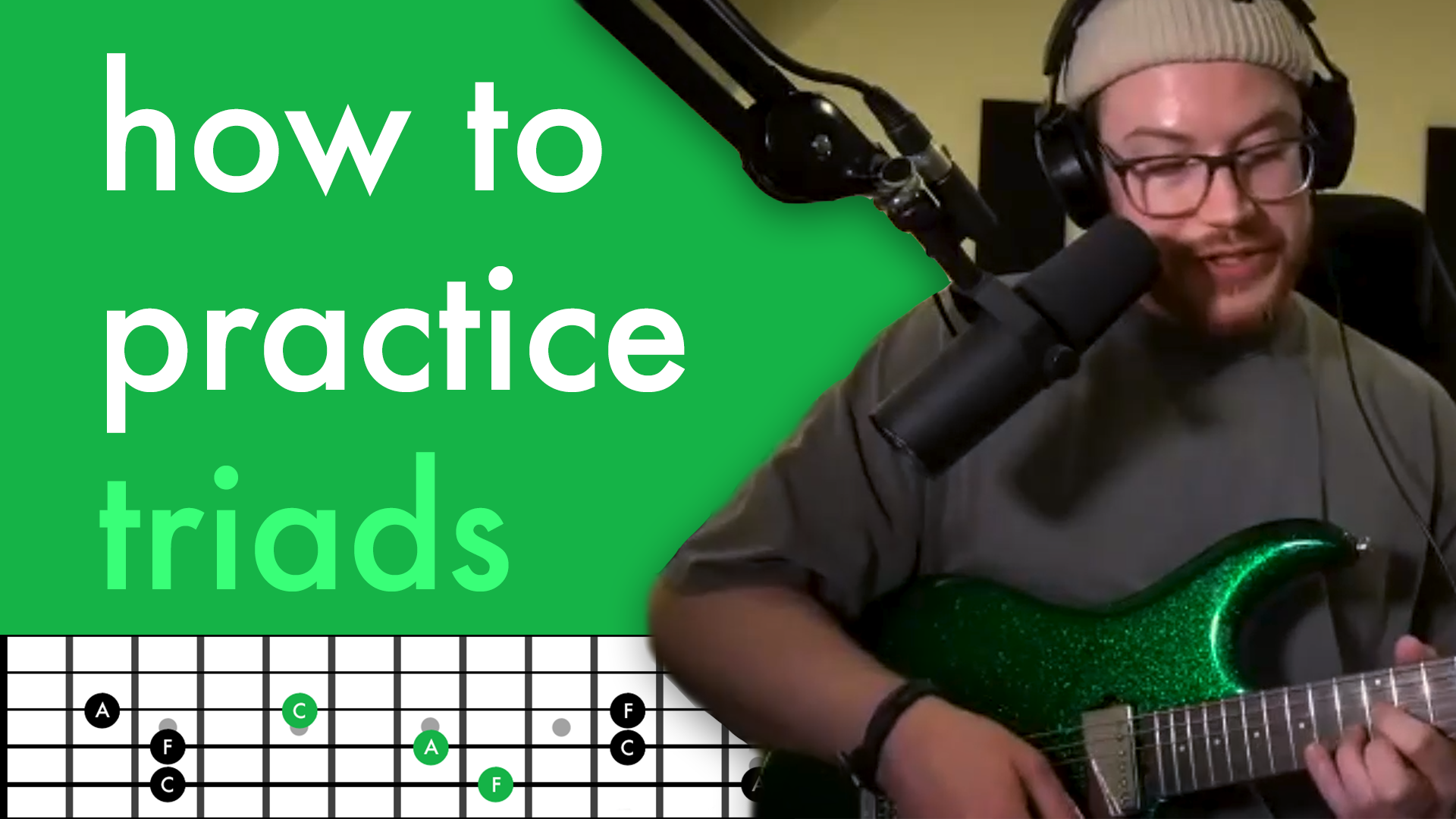
How to practice triads
If you don't understand what's happening from a musical point of view, then you have to come up with some kind of hack to explain to yourself why what you're doing works. You can either learn it properly and have an extensive understanding which will allow you to use the knowledge in any situation. Or, you can come up with your own explanation that is only applicable to one specific example.
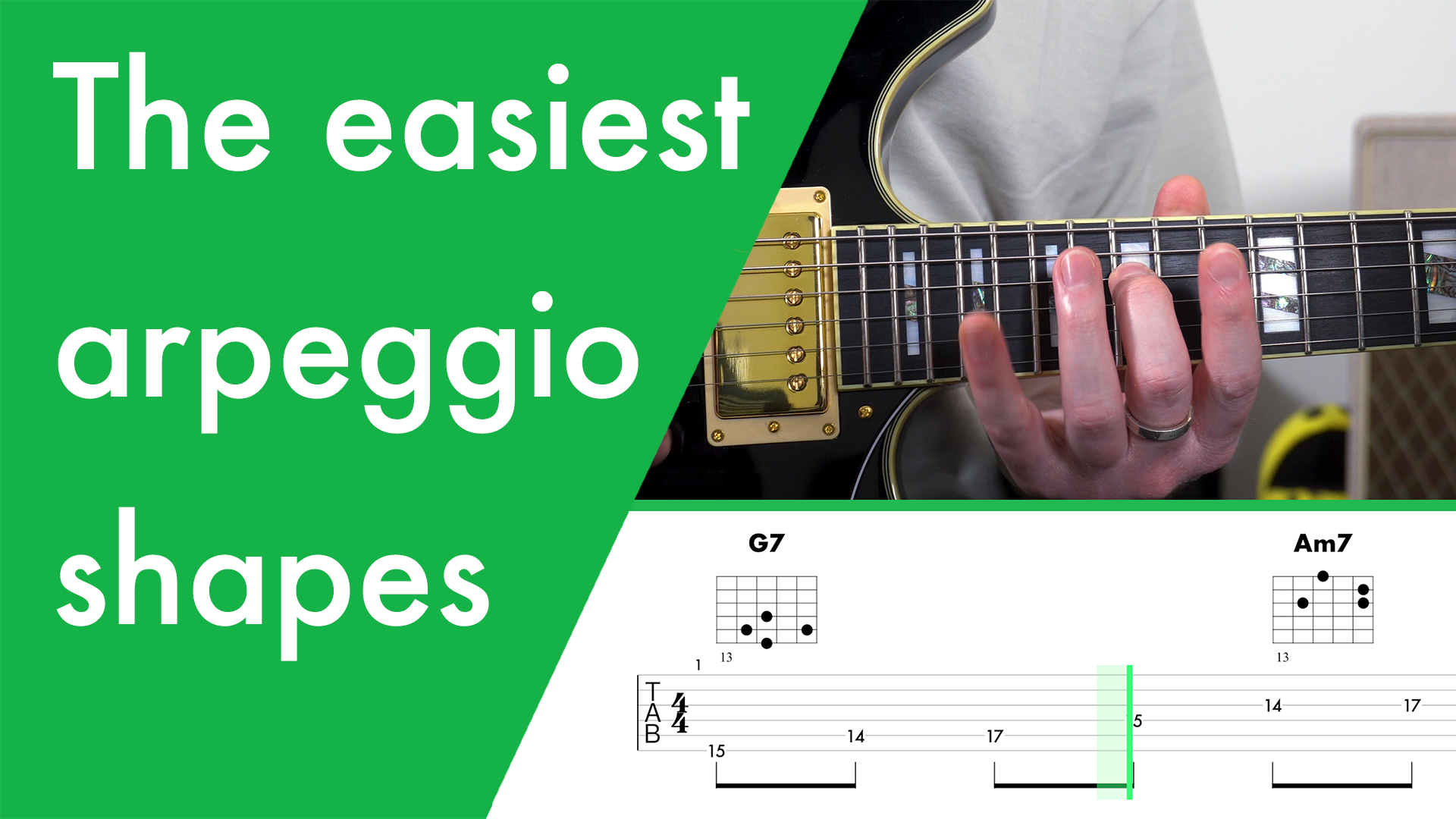
How to stack seventh arpeggios for full extensions
It can be a pretty intimidating idea to think that we have to remember seven different seven-note arpeggio shapes just to be able to play all the chords in the key.
Thankfully, there is a simple trick we can use that only requires us to know the single octave shape for four seventh-type arpeggios.
That’s a lot less intimidating.
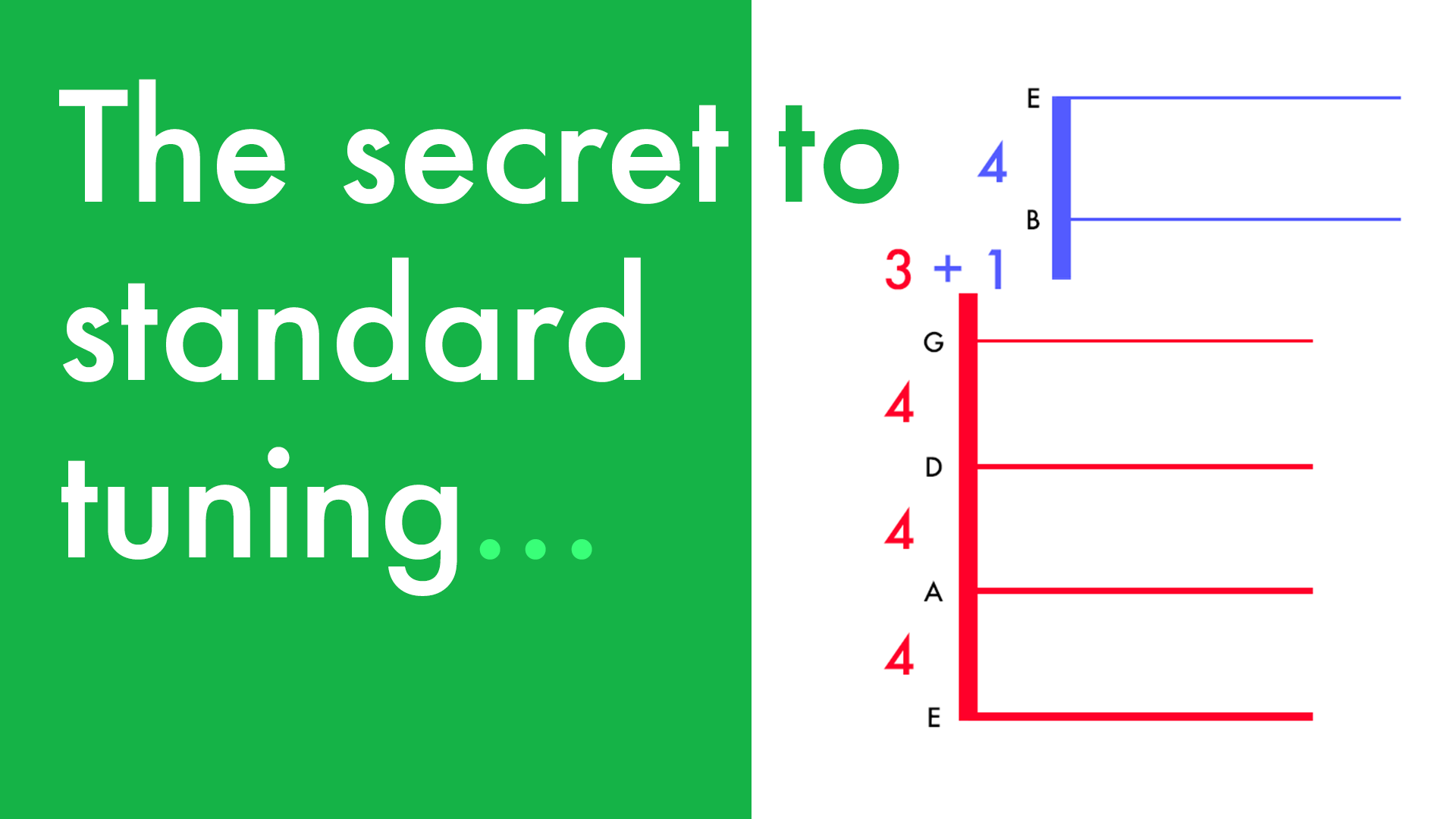
How guitarists use the B string to master standard tuning
We always aim to be as efficient as possible when playing the guitar. Trying to ‘do a lot less reaching’ is one of the reasons why having the G and B strings separated by a sneaky little third interval is such a great idea. Scales and chords are easier to play, our fingers are more centred, and we don’t have to change positions as often as we otherwise would.
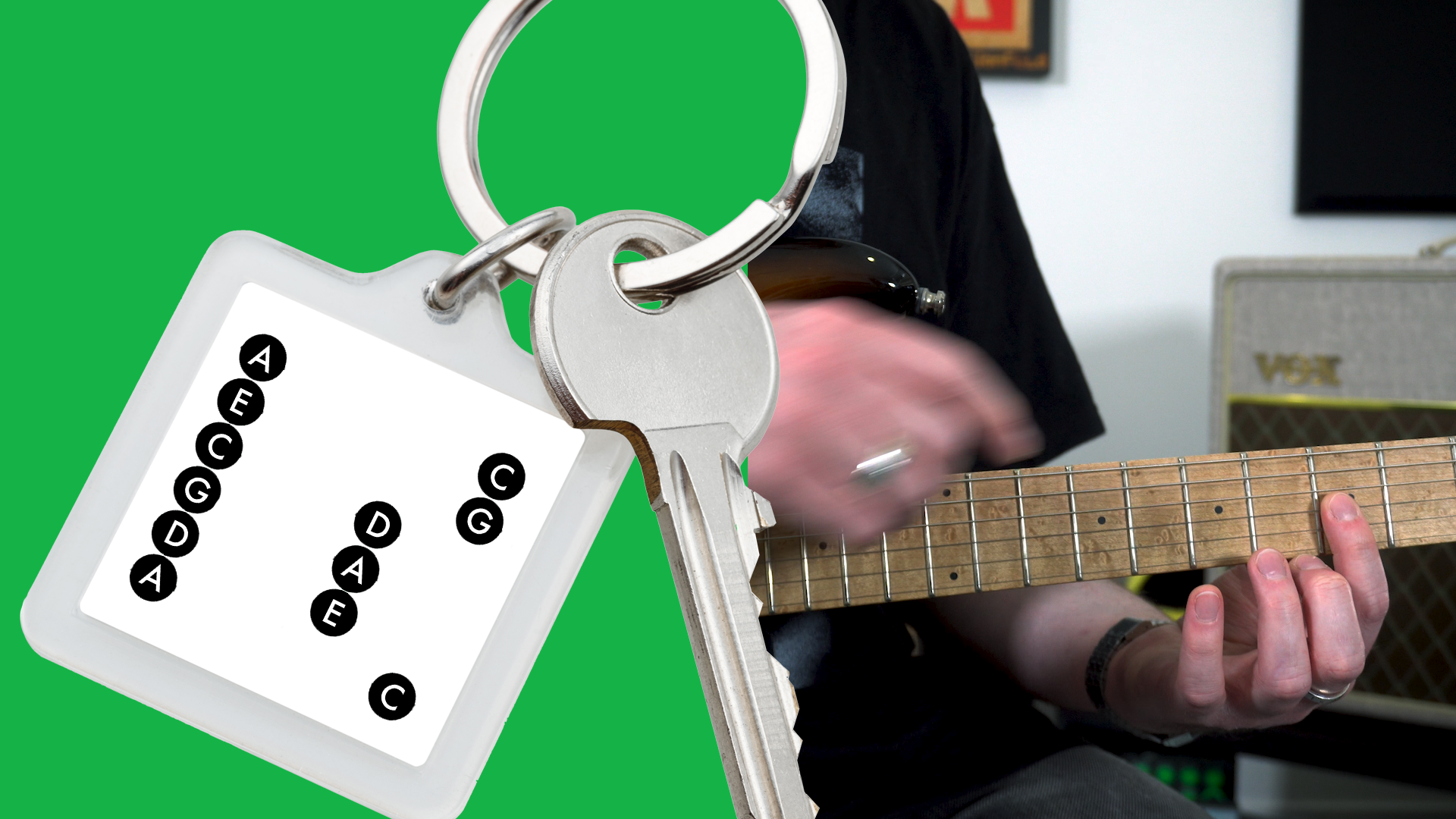
Unlock the fretboard with one pentatonic shape
With this one pattern and some minimal theory chops, you’ll be able to play the major pentatonic scale, the minor pentatonic scale, the major scale, and the minor scale anywhere on the fretboard in any key.

How to figure out the key of a song by ear
In this lesson, you’ll learn two easy ways to figure out the key of a piece of music. In the first example, we’ll start with a chord chart and use the natural pattern of chords in a key to figure out which key we are playing in. In the second example, we’ll use our major scale to find the key of a piece of music while listening to the track.

Did You Know Songwriting Was This Simple?
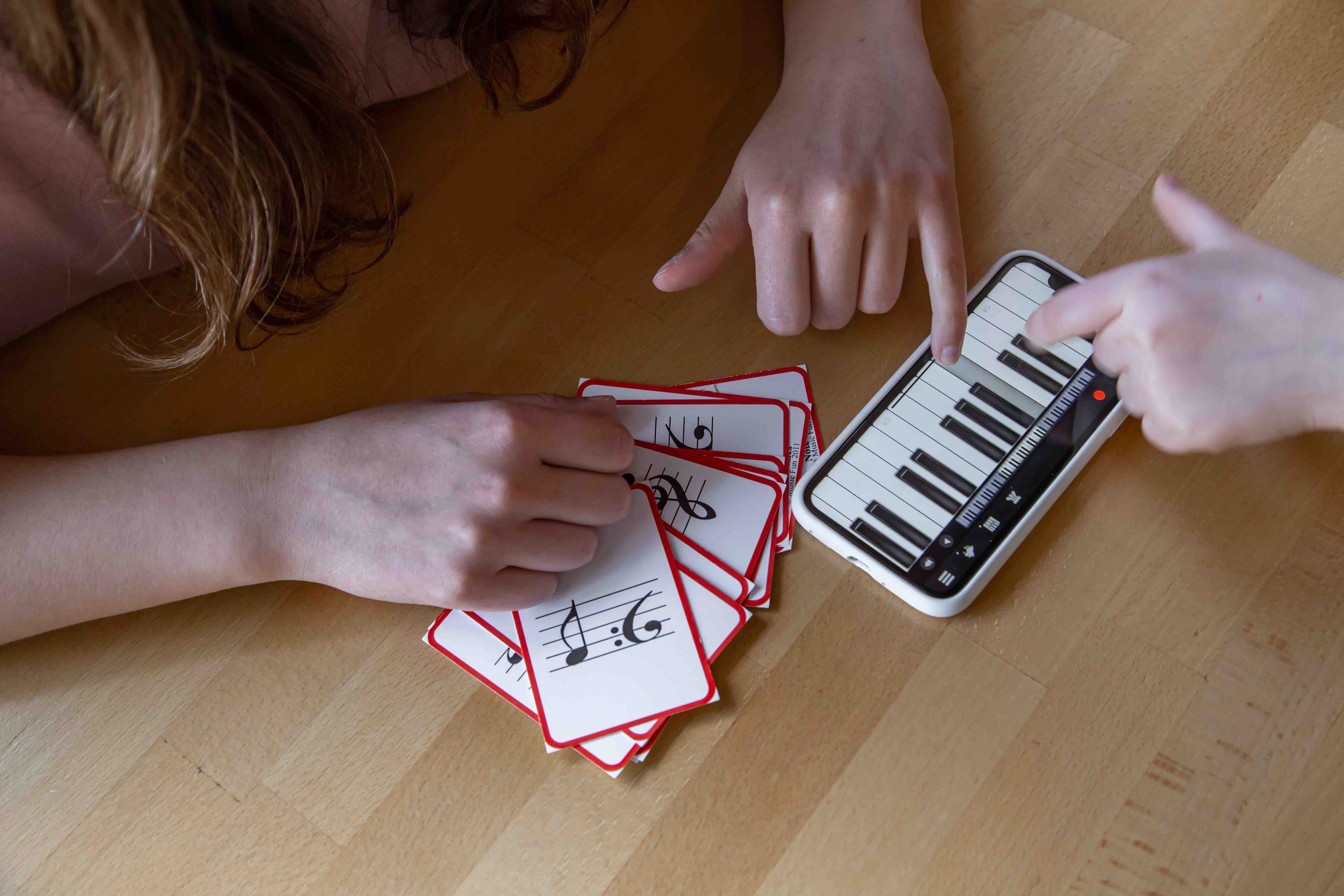
How To Easily Figure Out The Key Of A Song
A key is a family of seven chords that work really well together. They’re all related by the way they interact with the tonic (the chord built on the first degree of the scale). Major keys have a happy, upbeat sound, created by emphasising the major chords of the key. Minor keys often sound sad, sorrowful, and prefer to dwell on darker sounding minor chords.
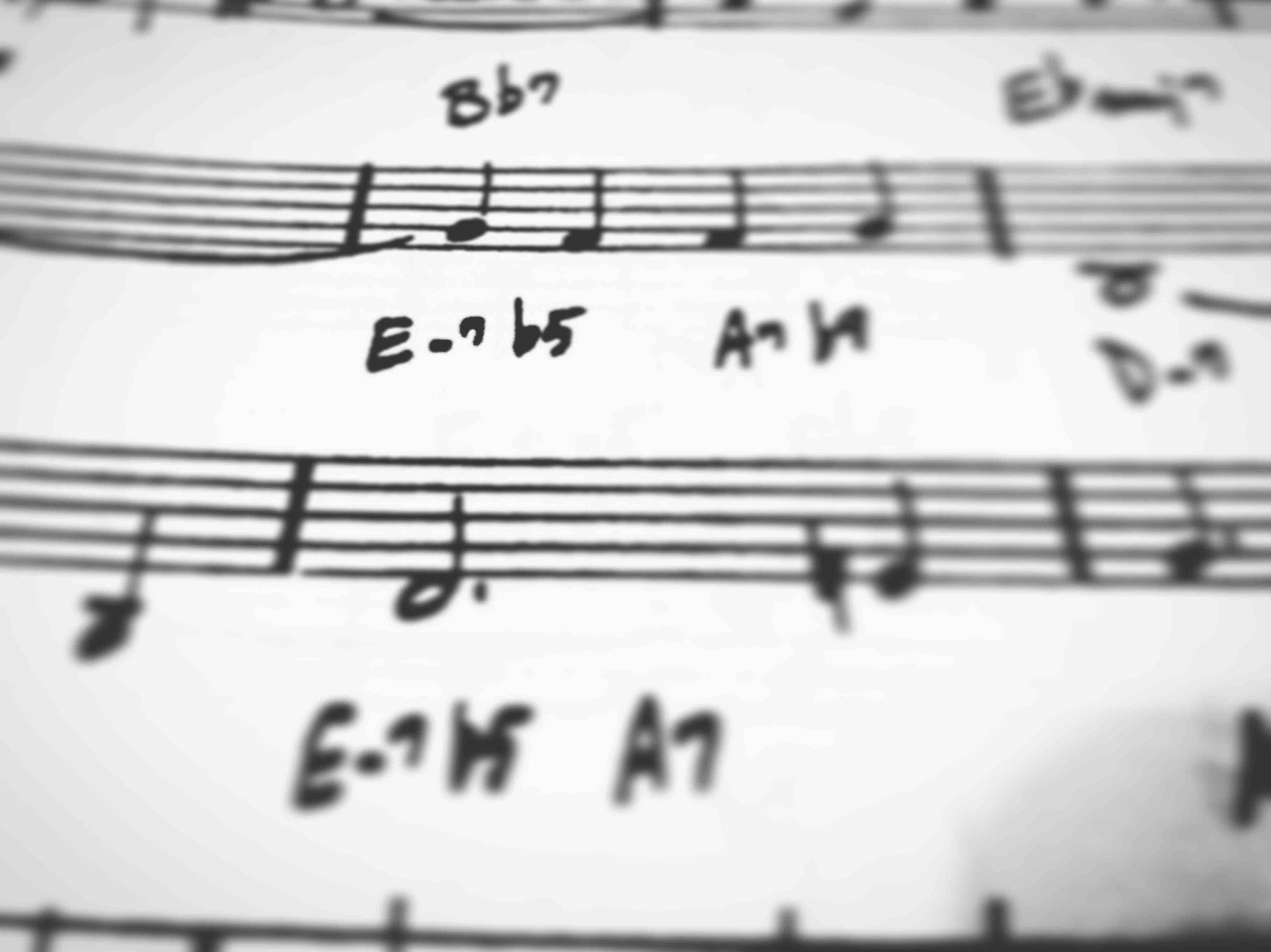
How to read chord symbols in 3 easy steps

How to read chord progressions like a pro

How To Learn Music Theory 10 Times Faster
For music theory to actually be useful when you're playing the guitar, you need to be able to use it without thinking about it. In this article, you'll learn a simple exercise that will help you build the same level of familiarity as a guitarist who's been practising every day for 10 years!
A guitarist who has learned all the notes on the fretboard: Can more effectively learn scales and chords; Has a better understanding of keys, intervals, and scale degrees; Is able to more easily memorise songs; Has a greater capacity to understand music theory; Is more effectively able to develop their aural skills; Gets ‘lost’ far less frequently when they are improvising on the guitar.