Memorising keys is not something most musicians want to do. It’s not fun, but it is useful. In this lesson, I’m going to show you a nice, easy way to learn all of the keys basically instantly, and actually be able to use them for useful things.
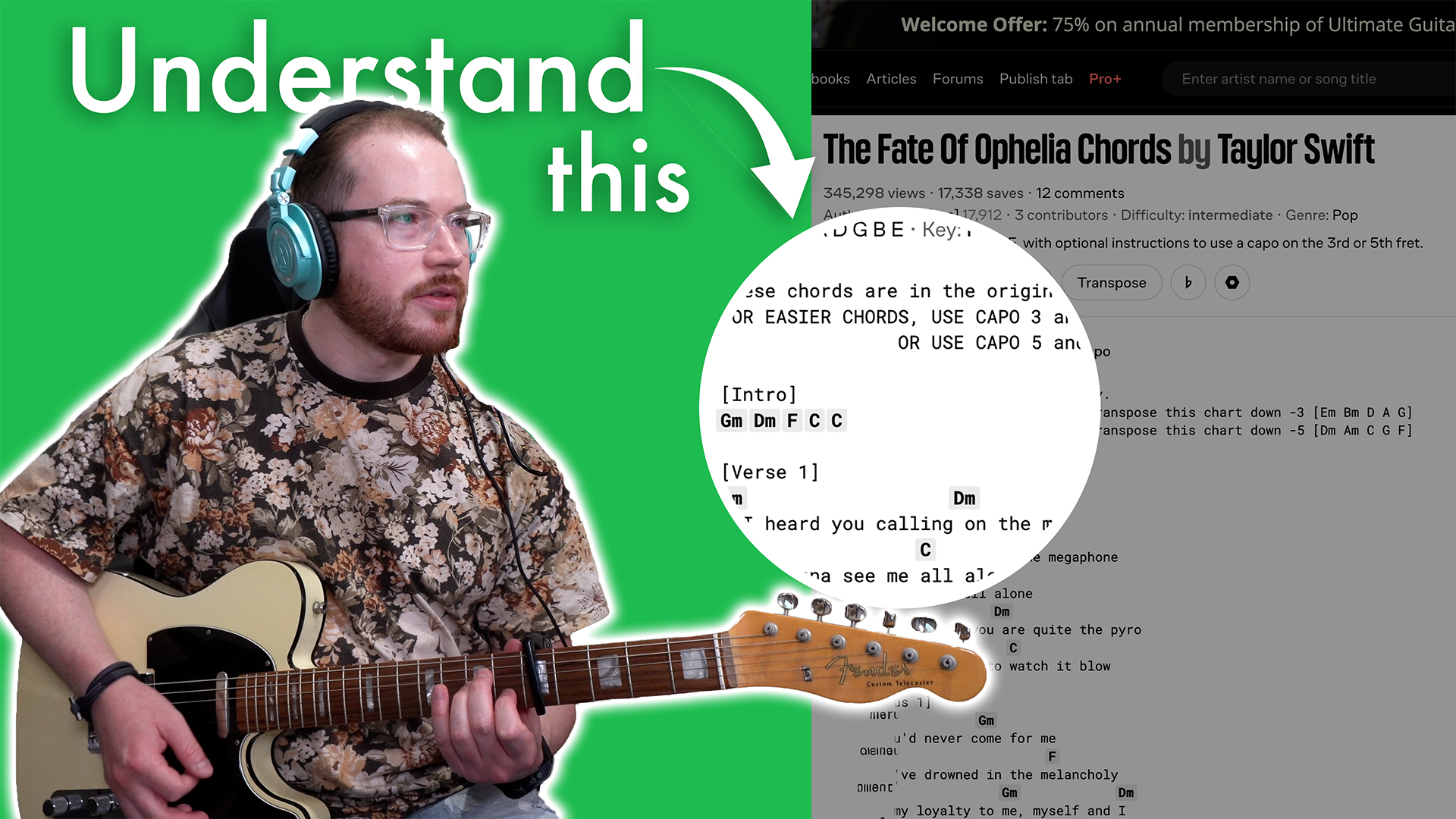
Why are knowing our keys useful? If we’re looking up chord charts on Ultimate Guitar and something is notated incorrectly, understanding keys lets us spot the problem and avoid getting frustrated when something doesn’t seem right. If we know our keys, we can also transpose very easily in our head.
There are fifteen keys, but we don’t have to learn all of them. I think learning the keys of C and G as a starting point is a really good idea. If you want to go further, learning three or four keys total is plenty. Unless you want to be a professional musician, learning all of them isn’t that important.
These two keys, C and G, are the most important ones to memorize. If you’re not going to learn any others, learn these. Between C and G, you can basically play every other key using a capo. If something doesn’t work in the key of C with a capo, it will work in the key of G, and vice versa. If you understand C, G, and how to use a capo, you can play in every other key anyway.
If you’re interesting in learning how to use a capo to play in every key, check out The Musician’s Guide to Beginner Guitar.
Whether you want to strum along to your favorite songs, jam with friends, or create your own music, this course will help you build a solid foundation that fosters growth and creativity in any direction you choose.
What is a memory hook?
Most people think learning keys means memorizing all the major scales, all the sharps and flats, and all the key signatures. That sounds like a big task. But it’s easy if you use memory hooks.
A memory hook is just something we associate with what we’re trying to learn. It can be silly or obvious. It doesn’t matter, as long as it helps you remember.
The order of sharps and flats
There are fifteen keys. The first thing we need to know is the order that which sharps and flats are added. This order is always the same.
For sharps:
The key of G has one sharp - F#
The key of D has two sharps - F# and C#
The key of A has three sharps - F#, C#, and G#
The key of E has four sharps - F#, C#, G#, and D#.
And it keeps going like that.

A common sentence to remember this is:
Father Charles Goes Down And Ends Battle.
With the first letter of each word representing the order of sharps.
Flats are added in the opposite order:
The key of F has one flat - Bb
The key of Bb has two flats - Bb and Eb
The key of Eb has three flats - Bb, Eb, and Ab
The key of Ab has four flats - Bb, Eb, Ab, and Db
The sentence for flats is:
Battle Ends And Down Goes Charles’ Father.
It’s the same thing, just backwards.
How many sharps or flats are in a key?
Once we know the order, we just need to remember how many sharps or flats are in each key.
For sharps, I use these memory hooks:
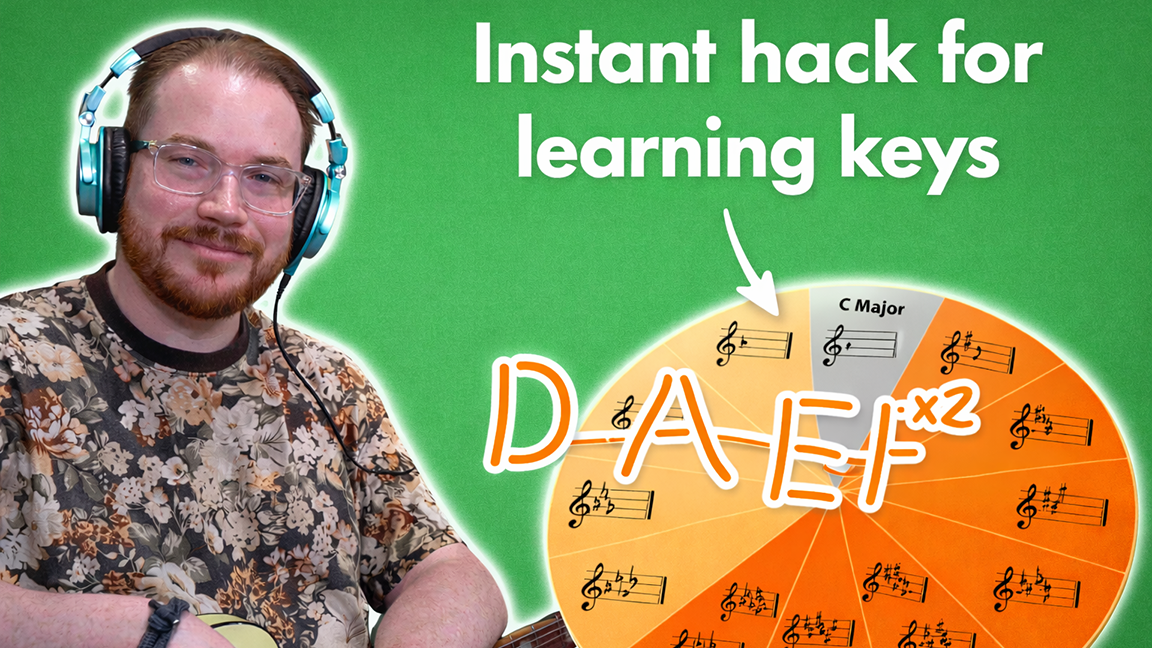
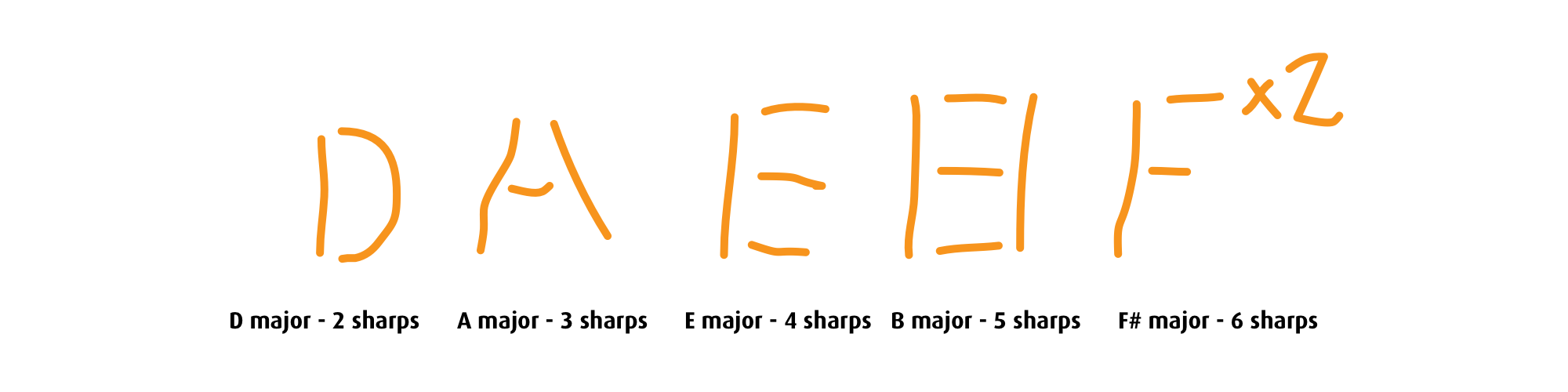
D major takes two lines to draw, so D major has two sharps.
A major takes three lines, so A major has three sharps.
E major takes four lines, so E major has four sharps.
B major takes five lines, if you imagine it like a calculator, so B major has five sharps.
F sharp major has six sharps. F has three lines, and I think of the sharp as “times two.” Three times two is six.
C sharp major has seven sharps, which is all of them.
C major has no sharps.
For G major, I used to just remember it, but now I think of C and G as looking similar. A capital G looks like C with one extra line, so that’s one sharp.
For flats, I use these memory hooks:
F major has one flat. I’ve always found that easy to remember.
B flat has two flats. It looks like two little B’s.
A flat and E flat are the opposite of A and E major. A major has three sharps, so A flat has four flats. E major has four sharps, so E flat has three flats.
F sharp major (remember the memory hook from the sharps) and G flat major are the same, enharmonically, so they both have six.
That leaves D flat major with five flats. You can imagine D flat taking five lines to draw if you want.
The flat side isn’t quite as strong with memory hooks, which is why I start with sharps and let that help me work out the flats.
You just need to know two keys
At a minimum, I think it’s really important to memorise the keys of C and G. If you want to go further, learning two or three more keys is great. You don’t need to be fluent in all of them unless you’re trying to be a serious musician. Even if you’re not fluent, these memory hooks let you figure things out quickly when you need to.
Check out How to Learn Music Theory 10 Times Faster if you want a simple exercise that will help you get confident in every key.