
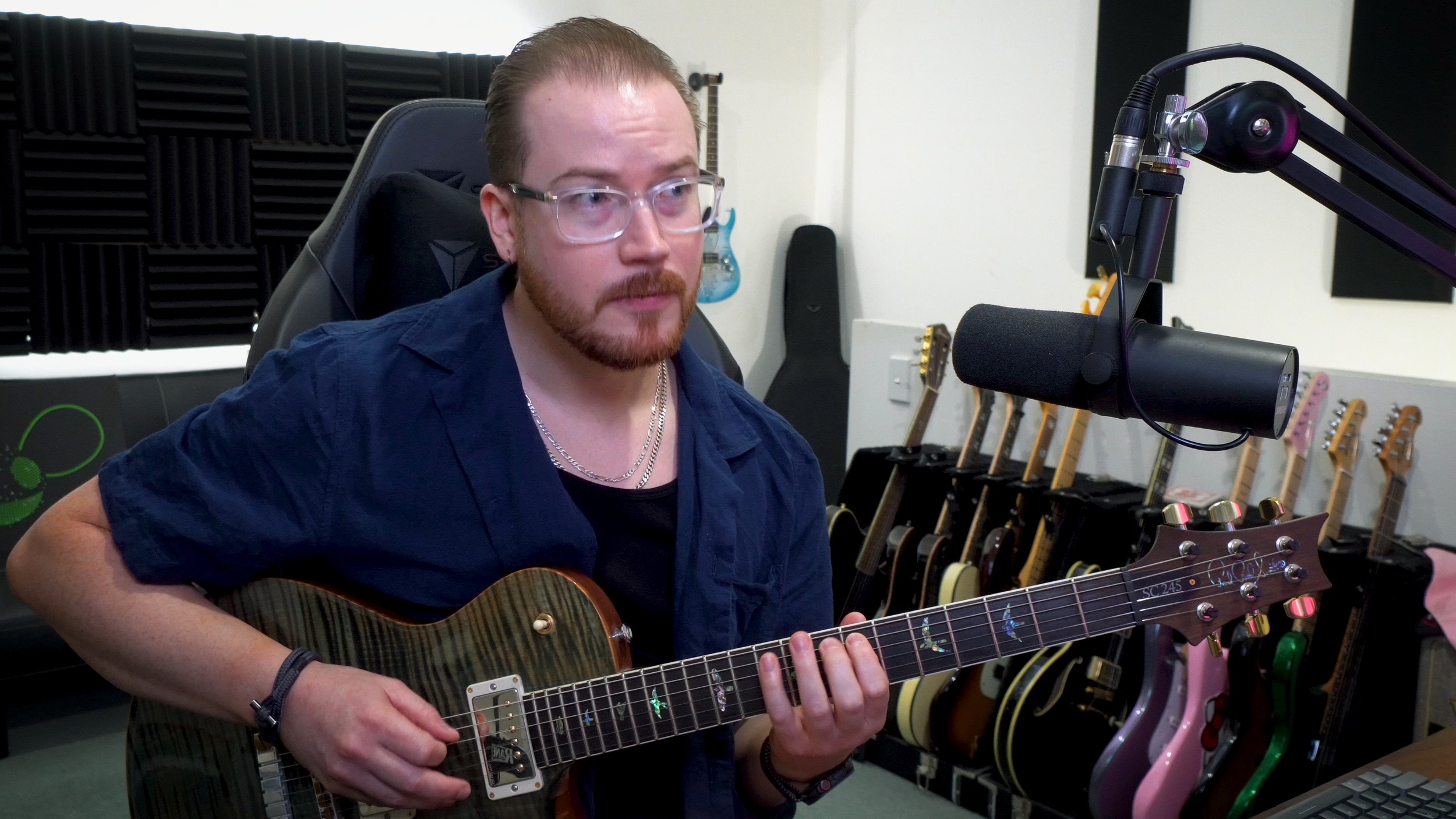
Rethinking how we learn the guitar
Music behaves consistently. The guitar behaves consistently. I built Guitar Nutrition so your learning system can too.
What teaching thousands of lessons taught me about learning guitar
Learning and teaching both piano and guitar felt like two different worlds. I knew the way music behaved didn’t change just because it was expressed on a different instrument. Concepts like keys, intervals, and harmony are always the same. What changes is how clearly the layout of an instrument reveals those ideas, and how musicians are taught to understand them.
The piano closely reflects how music theory works because the instrument is laid out in a clear, logical way. The same relationships exist on the guitar, but they’re far less obvious. Many guitarists learn chord shapes, scale patterns, and familiar grips without a clear sense of what those shapes are expressing musically. The shapes themselves often become the reference point for understanding, rather than the musical relationships behind them. These shapes don’t consistently mirror music theory, and guitarists who don’t also play piano often struggle to develop a strong sense of what’s actually going on.
Teaching thousands of students showed me just how widespread this problem is. I consistently saw guitarists who didn’t play piano struggle to get their head around music theory. That led me to rethink how guitar is taught. Music behaves consistently, and when you understand the layout of the guitar, you realise it behaves consistently too. It just isn’t often taught in a way that highlights this. Guitar Nutrition grew out of this realisation. My goal isn’t to throw out the old chord shapes or scale patterns, but to help guitarists understand them in a way that integrates music theory from the beginning, so they can better understand what they’re playing and apply music theory with confidence.
How Guitar Nutrition works
Most guitarists start by learning chord shapes and scale patterns. These quickly become their foundation for understanding the instrument. But what’s often missing is a clear link between those shapes and the music theory they’re built from.
As a result, guitarists are left trying to learn how music theory works while also figuring out how to apply it on an instrument that isn’t usually taught with theory in mind. Music theory can feel abstract or disconnected on the guitar, not because it’s complicated, but because traditional methods of learning the instrument don’t reflect how it works in a clear or consistent way.
Guitar Nutrition is built on two key ideas. Music behaves consistently, and the guitar behaves consistently. When learning is based on this shared consistency, chords and scales stop feeling like an endless collection of disconnected shapes and instead become predictable patterns you can apply anywhere on the instrument. Your understanding of the guitar reinforces your understanding of music theory. In turn, your understanding of music theory opens up new possibilities on the guitar.
The three C’s
Consistent
Music theory behaves consistently. The guitar does too.
Approaching the instrument with this in mind reduces the number of disconnected shapes and patterns you need to memorise.
Connected
Learning the guitar with its consistency in mind means chords and scales don’t feel like isolated patterns.
They connect intuitively, enhancing your understanding of music theory on the instrument.
Complete
You develop a foundational system that strengthens everything you already do on the guitar and supports everything you’ll learn next.
What makes Guitar Nutrition different
Traditional guitar education focuses on chord shapes and scale patterns. But this doesn’t reflect how music theory actually works, leaving players to piece things together on their own.
Guitar Nutrition is built on the idea that both music theory and the guitar behave consistently. When this is your starting point, an understanding of music theory develops naturally as you learn.
Instead of having to memorise endless shapes in every position, Guitar Nutrition shows you how the patterns at the heart of music theory behave the same way everywhere on the fretboard. Music theory doesn’t have to be something you learn later. It becomes part of how you understand the guitar from the beginning.
This shift changes everything. Progress feels structured, ideas reinforce each other, and music theory starts to make sense directly on the guitar.
Want to explore this approach further?
I share some of my favourite ideas in a free 30-day email series. Each day, I’ll introduce a simple idea to help you think more clearly about the guitar, your practice, and what real progress looks like on the instrument. If it’s not for you, you can unsubscribe at any time.